

| Situation | What is supported | Planning use |
|---|---|---|
| Land needed for a public project | The taking can include only land needed, or necessary, for the project, such as a road. | Check which parts of your parcel the project actually requires before accepting that the whole parcel is affected. |
| Payment for the land | Just compensation is meant to leave the owner in as good a financial position as if the property had not been taken. | Judge any offer against that standard, not against what the agency finds convenient. |
| Government does not start proceedings | The owner can sue the governmental unit, and the court can find a taking and order just compensation. | Consider an inverse condemnation suit if land is effectively used but no case is filed. |
| Temporary physical invasion | Courts have held that the invasion does not need to be permanent. | Do not assume a short-term intrusion is beyond a compensation claim. |
| Regulation that cuts property value | In Penn Central cases, decisions point to a post-regulation value of no more than 30% of the pre-regulation value. | A moderate loss of value is unlikely to be treated as a taking; a severe one may be. |
These points follow condemnation law practitioners’ summary of eminent domain and Cornell’s Legal Information Institute entry on just compensation.
What is eminent domain? It is the power of sovereign governments to force an owner to sell private property, limited by a public-use requirement and a duty to pay just compensation.
It is one of the legal tools behind roads, schools and utilities, so it sits inside the wider field of planning; if you want that context, start with what is urban planning. The sections below follow what a taking means for you first, then how the machinery works.
What a taking means for the owner
A taking changes your rights over land, and the change is not always a loss of the whole parcel. The practical question is how much of your property the project needs and what you are owed for it.
Partial takings and easements
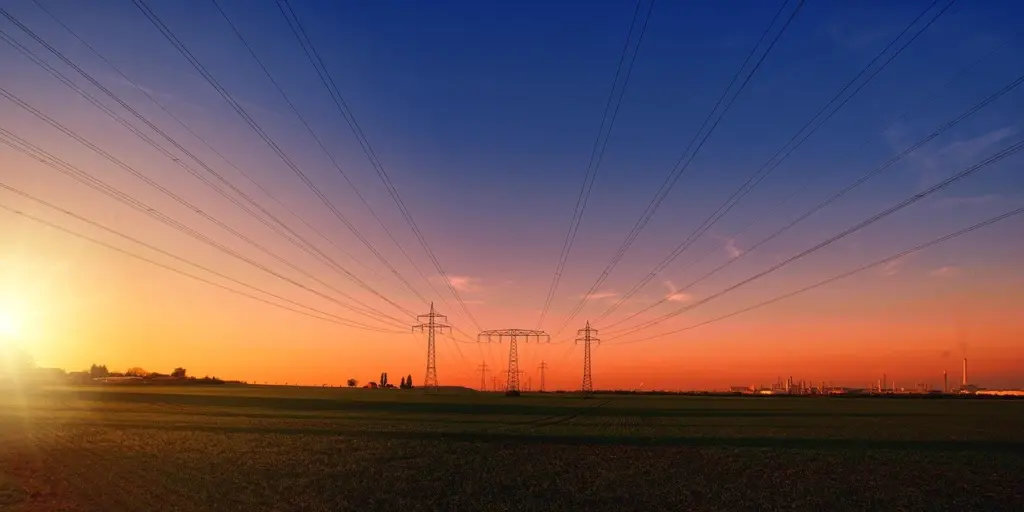
The necessity limit shapes most real cases. According to condemnation-law.com, a taking for a road can include only the land needed, or necessary, for the road. A narrow strip for a pipeline or power line, held as an easement, is the kind of limited taking that this limit points to, and it leaves you the rest of the parcel.
A smaller or oddly shaped remainder can change what you may build on it. Reading up on what is a setback in zoning helps you judge how much usable land is left once the project is in place.
When no case is ever filed
Sometimes the government uses land without starting proceedings. In that situation, the owner is required to start a lawsuit against the governmental unit that did the taking, which is called inverse condemnation. The court then decides whether a taking occurred and, if so, orders payment of just compensation.
Regulation that reduces value
Rules can also amount to a taking. Decisions in Penn Central cases indicate that the value after the regulation should be no more than 30% of the pre-regulation value. Treat that as a signal that only severe losses qualify, not as a figure that guarantees a claim.
How just compensation is set
Just compensation is the payment the government must provide under the Fifth Amendment’s Takings Clause when it takes private property, as Cornell’s Legal Information Institute explains. Its purpose is to place the owner in as good a financial position as if the property had not been taken.

That standard gives you a way to test an offer. If a payment would leave you financially worse off than before the taking, it does not meet the purpose of the clause, and the second phase of the case exists to settle that disagreement.

- Focus on the owner’s position. The measure looks at your financial position before and after, not at the project’s budget.
- Treat the offer as a starting point. Compensation is decided in its own phase of the case, so an early figure is not necessarily the final one.
- Match the claim to the taking. A partial taking and a whole-parcel taking leave you in different positions, so the comparison should reflect what you keep.
Public use and who holds the power
The Fifth Amendment says that private property may not be taken for public use without just compensation. Pacific Legal Foundation notes that all sovereign governments have the power of eminent domain, and that it operates within those two limits.
Who may exercise it
The power is typically granted by the state through a statute, and some grants require an application for a specific project, according to condemnation-law.com. Cooper Schweikert Hamilton lists entities that can use it, including state and local transportation departments, cities, counties, school boards, sanitation districts and utility companies.
What counts as public use
Typical examples are a highway, post office or military base. Traditional public uses also included roads, schools, courthouses and jails. Courts have used public use and public purpose interchangeably, a shift tied to the mid-twentieth-century blight takings, so a project does not have to be a building the public walks into to be argued as a public use.

The acquisition process step by step
Because the power usually comes from state statute, the exact notices and filings depend on your state’s law. The sequence below describes the structure the evidence supports, as seen from the owner’s side.

- Identify the land needed. The agency decides which parcels or parts of parcels the project requires, and the taking can include only land that is necessary for it.
- Establish the right to take. Eminent domain cases have two phases, and the right-to-take phase comes first. It asks whether the agency may take the property for a public use.
- Decide just compensation. The second phase, sometimes called the damages phase, sets the payment that restores your financial position.
- Sue if nothing is filed. If the government refuses to start proceedings, you can file an inverse condemnation suit yourself.
Condemnation is the common name for this process, and some states call the taking an acquisition. The planning behind such projects is a profession of its own, and how to become an urban planner explains how people enter it.
Challenging a taking
An owner can contest a taking at the right-to-take phase, where the issue is whether the use is public and whether the land is necessary. Disputes over the amount belong to the compensation phase.
- Challenge necessity. If the agency’s map reaches beyond what the project needs, the necessity limit is your strongest argument.
- Challenge the use. Test whether the stated purpose fits the public use language of the Fifth Amendment.
- Challenge the payment. Argue that the offer falls short of leaving you as well off financially as before.
- Bring your own claim. Where the government used your land without a case, inverse condemnation puts you in charge of starting the suit.
Frequently asked questions
Is condemnation the same as eminent domain?
In practice, yes. Eminent domain is frequently called condemnation, and some states call the taking an acquisition.
Does the government pay the owner’s costs and fees?
Many states require the governmental unit to pay the owner’s costs and fees after a taking is confirmed. Check your state’s statute for the exact rule.
Does a state need a statute before it can take land?
The power is typically granted by the state through a statute. Some grants require the agency to apply for a particular project before it can use the power.